Saturday, May 30, 2020

Product Review: Black and Decker LSTE522 20V String trimmer

My first electric trimmer was an old Black and Decker with a built-in lead-acid battery. It worked OK, but it wasn't super powerful and it came off charge one winter and the battery was destroyed. 

My second attempt was an 18v Grass Hog. That thing served me admirably for 9 years, until the motor finally gave out. I bought another just like it used on eBay which lasted me another two years. 

I was reluctant to switch to 20v because I had so many tools that ran on 18v. And, I didn't want to be using two sets of chargers and batteries during a transition. 

Ultimately, my wife forced the change on me by getting me a Black and Decker 20v tool set for Christmas. I had no choice but to upgrade. 

In the meantime, I found a handy adapter that lets you use your 18v tools with the 20v batteries. 
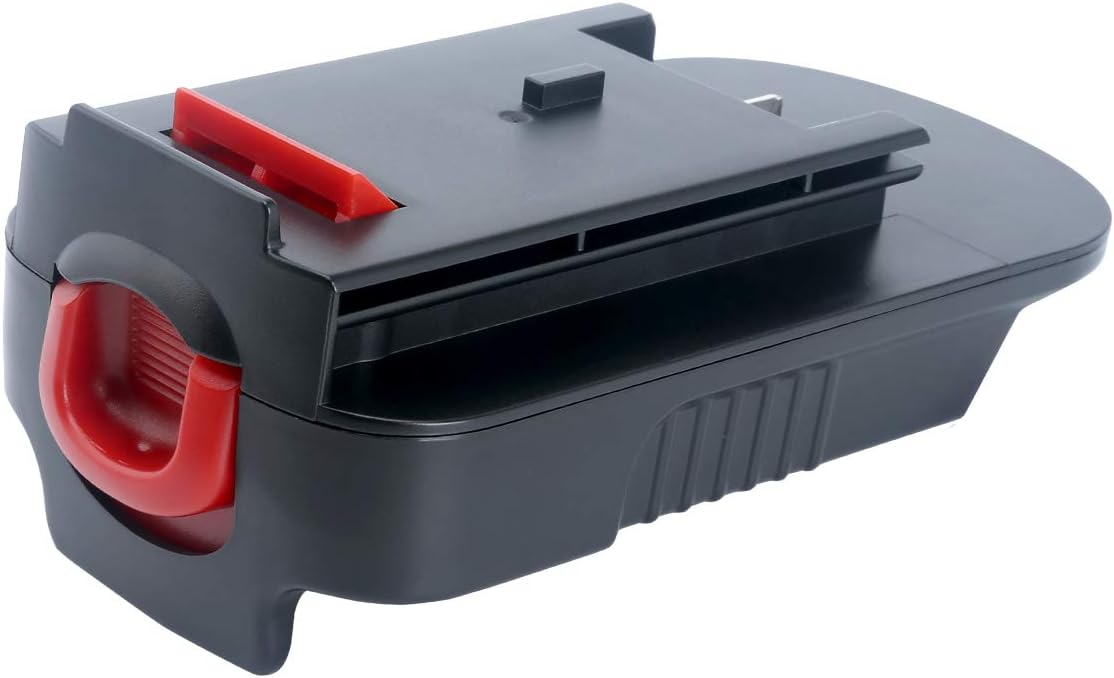
That was all it took. Now, I could standardize everything on one battery type and charging system. 

So, when my old 18v trimmer gave out this spring, I knew it would be no big deal to get a 20v upgrade, which is exactly what I did...

Behold, the LSTE522 trimmer from Black and Decker. This thing is so much better than my old 18v system. 

First, the torque. It's still not what a gas trimmer would be, but it's pretty darn good. You can clear lightly overgrown areas with it without much trouble. 

While it has more torque, the supplied line doesn't work really well for tough stuff. My advice would be to get a shaped line for it. I use a square 0.65 line and it performs much better. 

It has a line feed switch which seems to work pretty well. It also has an edging wheel, which I haven't had a chance to try. 

The hold position is comfortable, but your finger does get tired from holding the trigger. There's almost no travel to the trigger, so if you're not paying attention, you can let it off really easily. I'd rather the spring loading be a little lighter and have the trigger's travel be maybe 1/4" or so. 

My biggest complaint is one that I often have with tools of any type...they're not sized for a person over 6' tall. This is no different. The shaft extends pretty far, but I still have to hunch over to trim, meaning a sore back after a while. 3" more length would be welcome. 

The standard B&D batteries are good for about 20-25 minutes run time, which is adequate to do a small yard. Do yourself a favor and get a higher amp battery, especially if you've standardized on the 20v system.  I have a 6 amp battery, and this morning, I cleared two abandoned front yards with it in my neighborhood and had enough battery left over to knock down the grass in my front yard when I was finished.  Total run time was about 75-80 minutes. 

That same battery will run the 5" circular saw, utility saw, or drill all day long. 

No need to pay full price on the batteries. I have been buying Powerextra aftermarket batteries for years and have had good results. You can get the Porter Cable models, and with a Dremel and 5 minutes, you can modify them to fit in either the Black and Decker or Porter Cable tools. This is handy for me, because I have a Porter Cable brad nailer that also works on 20v batteries. 

I plan to buy the optional Mower Deck for this trimmer as well. 


It snaps onto the trimmer and converts it to a 12" mower. It would be perfect for my small front yard when I don't want to drag the gas mower out. 

I'll keep you updated. 


Friday, August 3, 2012

UPDATE: Further testing with the AR 15 and Tula Steel Cased Ammo

If you'll recall, I was experimenting with my AR 15 that tended to be a little cranky with steel-cased ammo.  Previously, I'd run about 150 rounds through it using a ratio of 1 brass to 10 steel cased rounds and found some success.  I finally succeeded in getting back out to the range yesterday to do further testing.

Although I didn't get to shoot as much as I wanted, I still think my results are significant.  I put an additional 50 or so rounds through the AR, which operated without a hitch.  I still haven't cleaned the gun.  Before shooting, I opened it up, and true to the Tula reputation, the insides were quite filthy.  Nevertheless, the gun operated reliably and I experienced no malfunctions of any kind in the entire 50 rounds.

For the record, that's nearly 200 rounds of steel cased ammo that I've fired through my gun.  Before I started mixing steel and brass, the same gun would malfunction on steel ammo, almost like clockwork, before I could finish the third mag.  Usually, the stoppage wasn't fixable without a cleaning rod.

Although my methods are not even close to scientific, they're good enough for me.  Yesterday, I also bought a few more boxes of steel cased ammo, which I intend to keep shooting (for cheap).

I'm going to continue this test.  I want to run the AR to failure using this dirty, cheap, steel cased ammo, performing no maintenance except for oiling with Mobil 1 synthetic 10W-40, my preferred lubricant of choice.  People may laugh at this, but I've had excellent results.  The oil stays where I put it...even after many rounds, when I open up my gun, the internals are still thoroughly coated with oil.  There's little to no cook-off, even on the back of the bolt where most of the heat and carbon usually build up.  And, the anti-deposit nature of synthetic oil means that most of the gunk is actually suspended in the oil, not fused to the metal parts of my gun.  It just works.

I figure if it holds up for a 1,000 rounds with dirty Tula, it should be just fine to shoot that much or more of brass without worrying about a significant malfunction.


Tuesday, July 31, 2012

Cinnamon and MATE on Linux - get your Gnome 2 back!


You can imagine the disappointment that many Gnome fans experienced when Gnome decided not to be Gnome anymore, and Ubuntu decided to enter the desktop environment wars with the ironically named, "Unity", which has divided users into several opposing camps regarding desktop environments.  Regardless of your pick, one thing was certain...Gnome was gone and wasn't coming back.

Or was it?  From the instant that Gnome decided to become a cell-phone interface, and Ubuntu followed suit, some intrepid developers decided to save the Gnome we knew and loved, or at the very least, a Gnome-like interface.  The result is two desktop environments that are very similar to Gnome 2: MATE and Cinnamon.

 Cinnamon, tweaked to look like Gnome 2

The default Cinnamon, when running on Linux Mint, follows a Windows paradigm with a toolbar at the bottom and a "start" menu on the left.  It can be configured with top and bottom menu bars, and offers an "Applications Places System" menu, just like classic Gnome.  You have to configure it this way, but it can be done.

 MATE, tweaked to look like Gnome 2

MATE looks almost exactly like Gnome 2, but again, on Mint, requires some changes to replicate the good ol' Gnome desktop.  After some tweaking, it feels just like Ubuntu 10.04 or so, and works just like it too.  The only difference I could see is that there's not a User menu on the top right that gives you IM, social media, and media player status like the old User menu on Ubuntu did.  Not a deal breaker, though, as most other Gnome functions are duplicated rather faithfully.

So, which do you choose?  If you want a desktop that replicates Gnome in look, feel, and function, and lots of configurability options, you'll want MATE.  I tend to think of it as a "Gnome 2 Legacy" desktop.  It seems to be a bit less buggy on my system, although your results may vary.  Cinnamon, on the other hand, would be good for someone who would like to use a "Gnome 3 Classic" style desktop - meaning, a desktop that follows the Gnome 2 paradigm, but adds lots of cutting edge features, although you sacrifice some ability to customize (the only option in the Appearance dialog is to reset the wallpaper)  You'll still feel like you're using the next, fancier version of the classic Gnome Desktop.  And, I expect Cinnamon to be better in the next version.

The only bug I experienced with either was with Cinnamon.  Every time I started Google Earth, I got a "phantom window", that opened in front of the tool bar at the top of the application.  There was no "x" to close, and the window would not move or resize.  The only way I found to fix it was to log out and log back in with MATE.  As a result, I've stuck with MATE and it has worked well for me.

The beauty of Linux is that you can try either one.  In Mint Linux, you can look for "mate-desktop-environment" or "cinnamon" in Synaptic, or open a terminal and type, "sudo apt-get install mate-desktop-environment" or "sudo apt-get install cinnamon".   There are also ways to add either environment to an existing Ubuntu install, but those methods are more involved than I wish to go into here.  Use your Google-Fu. 

So, if you think that Gnome 3 and Unity are complete wastes of time, install Cinnamon or MATE and start tweaking.  You'll be home in no time.

Tuesday, June 19, 2012

Netflix on Linux Desktops...it's PAST time!

I recently thought about opening my own Netflix account, since several of my friends use the service and enjoy watching movies on it.

I've been using Linux almost exclusively since about 2003, and I haven't really had to worry about compatibility issues with various on-line services since 2008 or earlier.  Even ESPN3 (or whatever it is called this week) works just fine on Ubuntu, so I thought that the days of complex workarounds and running WINE or virtual machines was over for the most part.

There seems to be one holdout that is still stuck in 2001, however, and that is Netflix.

Let me state unequivocally that there is NO excuse, here in 2012, to leave any major platform out of any on-line service.  EVERYTHING can run on Ubuntu/Firefox/Chrome these days.  I can run Google Earth, Google Voice, Hulu, Google Docs, and most other major web based services without issue.  Even many Microsoft services run just fine, which is surprising considering the history between Microsoft and Linux.

Netflix's stubbornness about refusing Linux support is just laziness.  Even my son's PlayStation 3 and Nintendo Wii both offer support for Netflix, but there is still no support for Netflix on the Linux desktop.

Inexcusable, but not surprising, considering Netflix's past bumbling and missteps.

Considering that switching to or adding Linux is relatively easy and almost always free, the users number in the millions.  You'd think that Netflix, by writing a few lines of code, would want to open up this market of potential customers.  ESPN3 did so, and as a result, I patronize their services. So do scores of other Linux users that I've talked to. And, apparently, someone inside the company thinks that the Linux crowd is worth the money, or at least they did at one point.  Why the change of heart?  Even worse, why insult us by promising us something and then failing to deliver?

Most people who know enough about computing to use Linux also understand that platform compatibility is a relatively simple issue these days.  They also are the type who will make a stand not to buy a product that won't work with their system on general principle. 

The bottom line is, I'm sitting here, dying to give Netflix my money to use their service.  Too bad they don't want it.

If you agree, give 'em a call: 1-866-579-7115.  If that doesn't work, try this, from one of the most valuable sites on the Internet: Contacthelp.com's Netflix page


Sunday, May 20, 2012

The AR-15 and steel cased ammo - how to make Wolf or Tula shoot reliably.

We've all been there...walking around the local gun store (or, as I like to call it, the Magic Goody Shop) and seen Russian-made steel cased .223 ammo selling for quite a bit less than the brass versions of the same rounds.  And, many of us have fallen to temptation and bought scads of the stuff, thinking of how much money we'll save, and how we can plink 'til our heart's content for pennies on the dollar.

And then, many of us have faced the bitter disappointment of repeated malfunctions and losing money when we give away a large pile of ammo that simply won't function properly in our guns.

I've seen quite a few stories of people trying to shoot steel cased ammo out of an AR-15 rifle with less than satisfactory results.  The most common issue is the dreaded "stuck case", where the case wedges itself so firmly in the chamber that the extractor simply doesn't have the "oomph" to move it.  In fact, most often, the only remedy is to put a cleaning rod down the bore of your gun and whack it with a hammer.

That's what I had to do.  My AR was particularly finicky, barely firing 50 rounds of Wolf or Tula before hanging up completely, bringing an early ending to a day at the range.  The thing would run like a champ all day long on brass, even crappy brass, but a couple boxes of Tula would bring it to its knees.

I began reading about this on the Internets, and it is a common problem.  Many have the completely WRONG idea about what causes this, however.

First, it is NOT caused by a "lacquer coating" cooking off and leaving its residue in the chamber.  If you don't believe me, get a spent shell and hit it with a blowtorch.  Nothing's coming off of that sucker.  If you've bought your ammo in the past few years, it doesn't even have lacquer on it.

Second, many people believe it is because the steel expands, and, being less flexible than brass, wedges itself in the chamber.  That's not true either.  But, steel being less flexible that brass does contribute to the problem.

The answer is simpler (and fortunately more correctable) than either of those.

Steel doesn't expand like brass does in the chamber.  This allows a slight gap around the cartridge case upon firing.  That gap admits powder residue and carbon into the chamber, which begins building up on the sides.  Pretty soon, the dimensions of the chamber are too small to allow the casing to move freely in and out.  The next time the bolt slams a round into the chamber, it wedges there, unable to be moved without physical intervention.

"Well," you might say, "the 7.62 x 39 rounds that I shoot are steel cased, and they don't have that problem".  No, they don't.  But, it is not because the blowback of residue into the chamber isn't happening.  It is because of the shape of the round itself.  The sides of the 7.62 x 39 are tapered enough that they can still overcome friction with the sides of the chamber.  The .223 is far straighter, and so it is far more difficult for the extractor to overcome the frictional forces of the now smaller chamber that has a good hold on the straight walls of the shell case. 

This is the problem I had with my rifle.  On multiple occasions, always after firing less than 50 rounds of steel cased ammo, I have had a major stoppage with my AR.  It always involved a spent case hanging up in the chamber, it always was impossible to clear without jamming a cleaning rod down the barrel and knocking it out, and it almost always put my AR out of action until I could take it home and work on it.

Once, while in the presence of a buddy of mine, I experienced the problem and he said, "You need to run a little brass in every mag to keep it cleaned out."

That didn't make sense to me.  How did brass keep the action clean?  Besides, common knowledge was that you never mix steel and brass when shooting...that mixing the two would only make this problem worse. 

Then I read this article on the Box O' Truth about steel case and brass cased ammo.  Although their hypothesis confirmed my friend's statement that brass ammo could help clean the chamber, they stopped short of recommending (or figuring out) that running steel and brass together can make a gun run more reliably.

I figured it was up to me to test it.

I started by cleaning the chamber thoroughly and soaking it down with CLP.  I then loaded my mags with one round of brass case for every 9 of steel.  Then, I headed to the range.

Fully expecting to get a stoppage before the end of mag number two, the AR kept eating the steel case well past that point.  The brass coming out eventually carried a considerable amount of black deposit on the outside of it.  It was rock hard and couldn't be scraped off with a fingernail. I did a variety of shooting, including slow firing (shooting once every 20 seconds or so), sustained slow firing (shooting once every five seconds),  fast firing (shooting as fast as I could pull the trigger) and even some bump firing (near automatic rates of fire).

The AR had two hiccups, probably attributable to the Russian ammo's lower power.  On the first, the round didn't quite come all the way out of the mag.  I gave the bottom of the mag a whack and it kept going.  The next, the bolt didn't appear to come back far enough to grab the next round.  A quick pull of the charging handle fixed it. The gun seemed to run fine otherwise, and most importantly, no casings were getting stuck in the chamber.  After five mags and nearly 150 rounds, I was running out of time and would be late for another engagement, so I packed it up to continue testing later.  Besides, the gun showed no signs of slowing down.  I was satisfied.

I have seen other options recommended, such as changing uppers or barrels to get a chromed chamber, or using a chamber reamer.  Both would probably work, but for the occasional use of steel cased ammo, both seem to be overkill. A 100 round box of cheap brass cased ammo should let you shoot 1000 rounds of steel case, if this method works for you.  You might even be able to tweak the ratios and get away with 1 for 20 or 1 for 30.

If you have an AR that doesn't like steel ammo, but have a stockpile of it or have a source where you can get it for cheap, it's worth a try to mix some brass in with the steel and see if your AR will run it.

Saturday, October 22, 2011

UBUNTU - PLEASE DITCH THE UNUSABLE MONSTROSITY CALLED "UNITY".

I've spent the morning just trying to get Unity to work. It's horrible. I can't understand any of it.

The whole point in a UI is that a person should be able to just sit down, and within a few minutes, figure it out. You simply cannot do this with Unity.

I just can't understand why the folks at Canonical would want to kill their disto like this. It is truly horrible to the point of being unusable.

I tried to do one simple tweak of moving the window buttons from the left to the right. It didn't work. Now, half the time the buttons are on the left, half of the time they are on the right. WHY?

With an old download of Ubuntu and the Gnome desktop, I could make my UI look EXACTLY the way I wanted it to. I could make it work for me. No longer the case.

I will never understand how taking away or hiding options is better for a user. Makes no sense at all. Now, I'm crippled.

The bad part is, I used to be able to just choose to use the classic Gnome interface. No more. Gnome 2 isn't even available.

Horrible. I'm convinced the people at Canonical are just stupid. They HAD the best Linux distro on the planet. No more.

Unity sucks. A lot. And, they're trying to force it on me. Forget that. I'm going elsewhere, and I'm recommending everyone else do so as well.

Monday, December 28, 2009

Kel-Tec P32 Review - Mousegun Mirth!

.32 Auto Keychain


Words cannot describe how happy I am so far with this gun.

Yeah, it's that good. And it is so good because it is so surprising.

It is not surprising because of it's superior Browning design (I don't know of another tilt-barrel pistol of this size), because it shoots a decently powerful .32 cartridge and yet manages recoil very well, because it is less than 7 ounces, five inches long, and less than an inch thick, and practically disappears in a pants pocket. It is not even good because it is reliable and acccurate.

It is surprising because it manages ALL of these tricks at once. This is a gun you can carry when you don't want to carry a gun. Stick it in your pocket, and it disappears, not to be thought of until you need it, or you get home and empty your pockets.

Now, there are people who look down their noses at the .32 auto. I agree. Although I regularly carry a 9mm, I sometimes feel that isn't enough gun. And, it a perfect world, I wouldn't consider anything less than a .40.

But, every one of those other guns has serious drawbacks to carrying. My full size 9mm, the Bersa Thunder, can be carried in an inside the pants holster, but the handle often prints through whatever shirt I wear over it. Plus, after a few hours, it tends to become uncomfortable.

I also have a Kel Tec P40, which I carry in a separate waist pouch. The waist pouch works great, but you have to deal with the extra bulk of carrying something "outside" your body. Also, access isn't great, because you still have to unzip it to draw your weapon.

But, when you shove the P32 in your pocket, it is as accessible as anything else in your pocket. And, no one will ever know you are carrying it.

It beats going unarmed, and that's the point. As a friend said, it beats throwing rocks.

Or, as I like to say, I don't know of a gun with which anyone would like to be shot. Any gun is better than no gun.

But, that's not to say that this is a bad gun.

The Kel-Tec is surprisingly accurate and smooth. I could punch holes in a tin can with reasonable regularity out to 10 yards, which is all one can expect for such a weapon. It cycled reliably with everything I fed it, except for some old, old rounds that actually had corrosion on the outside of the cases. On one, it struck the primer but the round didn't go off...not the gun's fault. On another, the last round wasn't powerful enough to push the slide back far enough to lock. Other than those (obviously ammunition related) minor issues, there was not a single problem.

Despite it's ultra light weight, the Kel-Tec was comfortable to shoot. I had initially avoided getting one of these for my wife because of reports that the recoil was stiff. I went with an AP-MBP .32 for her instead. But it seems to me that the Kel-Tec doesn't really recoil any more severely than that gun, despite being half its size. She could shoot it easily, and she had no problem racking the slide. She liked the way the Kel-Tec felt in her hand, and of course, it's "cute". She might end up taking it from me.

Guys...if you have a significant other who can shoot any handgun above a .22, rest assured that the Kel-Tec will be no problem for her.

Conclusion: The Kel-Tec will probably start going with me everywhere. I might carry it by itself, or as a back-up-gun, but it is so light and convenient, there is no reason NOT to carry it around with me everywhere. What is surprising from something this small and inexpensive ($249 at the local sporting goods store) is that the Kel-Tec is a real gun...not just a novelty that doesn't deliver on its promise.