Saturday, March 4, 2023

The small plastic bass boat...undersized gimmick, or great budget boat option?


INSTANT VERDICT, SUBJECT TO CHANGE:

THE GOOD: Take it anywhere you have more than 5 inches of water. Stable and maneuverable. Easy to handle, even with one person. Cheap to buy, zero maintenance to speak of. Comfortable for one person. Can mount a gas and trolling motor at the same time. Allows you to fish lakes and rivers where jet-skis and 200 hp pleasure boats cannot go. 

THE BAD: It's small. Carrying two degrades the fun somewhat. Slow, even with an appropriate outboard. No storage to speak of. Could be at a huge disadvantage in open water. 

THE VERDICT: I love this thing. And you will too, as long as you realize it's limitations. 

I've been out of the boat game for many years now. I had a 14 foot aluminum boat that was nice, but kind of a pain to handle because of it's size and weight. Even though it had a trailer, it could be challenging to launch and recover. Without a dedicated boat launch, it wasn't practical to use by one person. I kept it for over 20 years and sold it at a profit when I finally got rid of it. 

I tried a canoe for a while, but a canoe is just not fun to fish out of. It was low to the water, tippy, and hard to maneuver. Even with an electric motor, it's a long reach back to the motor mount. Granted, it was fast when under power, but it was also hard to get it to turn because of it's length. And, hit the power when you had the motor sideways and you were going swimming. 

I had looked at these small plastic bass boats for a while. They seemed like a good solution to the obstacles that kept me from going fishing. I put the word out that I was looking for one, and one of my in-laws turned me on to this one which I picked up for $500. It was a 2016 model, and it looked to be in mostly good condition. 

The particular model I ended up with was a SunDolphin Sportsman 8, but it hardly matters. There are tons of these boats sold under various trade names (Field and Stream Angler, Pond Prowler, Bass Buster, etc.) and they all follow the same formula...two piece plastic clam-shell design for the top and bottom, filled with foam, and a tunnel hull/mini pontoon configuration. Usually, they come in 8' or 12' foot configurations, and from the name, you can see mine is an 8. I haven't seen any functional difference between any of them...just minor cosmetic details. 

Once I had the registration transferred, I began outfitting it. One of the seats was missing. I took the remaining seat to the local high school and had the welding shop kids use it as a pattern to fabricate a new one. Using an old plastic chair top, I mounted it to the base with a swivel I got from Amazon for $11. I was then up and running with a second swivel seat, which actually is more comfortable than the one from the factory. 

As part of the deal, I got a 55 lb thrust Newport Vessels trolling motor, so that was taken care of. Let me say, 55lb thrust moves the little boat with authority, even on a windy day. This was into the wind on power level 2. 

I also got a deep cycle battery in good condition. First order of business was to get a gas outboard for some of the larger lakes around here. And I also ended up getting a lithium ion battery to replace the deep cycle so that I would have more electric range and my payload would be lighter. Good part is, the Sportsman 8 has motor mounts front and back, so you can have a gas outboard and an electric. How cool is that?

So, am I happy with my purchase? Weather has kept me from testing extensively, but the little I have gotten to use it I have enjoyed. Let's look at several aspects of the boat in more detail.

Size - I thought this would be a major problem, but it isn't. The boat seems plenty spacious enough to be comfortable, even for being out on the water all day. You can only really put your feet up if you have your chair pointed straight ahead or on a 3/4 angle...if you turn it sideways, your feet might dangle over. Of course, I'm taller than the average person, so that might not be an issue for someone else. 

I keep the battery/trolling motor up front and gas and oil in the back, just in case I need to refill either on the fly. Making the seat supports arched means you can keep stuff under them. I'm considering building a box and mounting it to the seat to add some extra storage...because there is none. No compartments, no boxes, no bins, etc. Just detents on the sides of the boat where you can put cups, cans, or bottles. I store fishing rods along one side and the paddle on the other, just because that seems to be the best place to put them. Adding permanent storage would involve drilling directly into the boat. Not sure what's behind the plastic, but this may be something I attempt at some point. 

Two people in the 8 foot version approaches the limits of what I would want to do for an extended period of time. You really are close to the other person, but not enough to make fishing impossible. It does feel cramped and you have to be really careful that you do not end up tangling with the other person. 

Durability - The thing is built like a tank. It weighs around 100 lbs, according to online sources...I'd say that's accurate. It doesn't feel floppy, wobbly, or twisty like a canoe. The bottom of mine has some scratches, but it doesn't appear to be anything close to damage that would cause a catastrophic failure. Something you will notice and perhaps become alarmed...some water does collect between the top and bottom clamshell parts. They are NOT sealed, nor do they really need to be, since the insides of the boat are foam. On mine, there's a plug at the front that allows the water that collects internally to drain. It's not necessary, because when you stand the boat on it's nose, the water seeps out of the seam around the front. Do this occasionally if the water inside bothers you, but thus far, I haven't noticed a large amount of water collecting and didn't notice that it affected performance when using the boat. 

Ease of handling - One person can easily launch and land this boat. I carry it in a utility trailer without issues. On the water, it's very predictable and performs like you would expect. Don't enter any races with it. With a 2hp gas motor, expect about 4-5 mph, which means you'll be able to outrun most paddlers and trolling motor powered boats. 

Versatility - About the only place you wouldn't want to go with this is on open water. Outside of that, ponds, rivers, and small lakes are all within reach. I even navigated some shoals with it without any problems. You literally can fish in places that other boats couldn't dream of going. Seasonally navigable small creeks are now on the table for fishing. 

Cost - I'd never buy one of these new. I estimate I saved between $300-500 buying secondhand, and there's absolutely nothing wrong with mine. You might get lucky like I did and get the trolling motor and battery thrown in on the deal as well. That puts it well within the range of even someone on a limited income, provided they can save up for a while. 

Final Word - You know you will have limitations in what amounts to basically an 8.5' by 3.5' space. But if you understand that going in and accept these boats for what they are, you will be very happy with what you can do with one of these. I don't mind tying up a few hundred in a boat/motor package that I can launch and recover myself and doesn't take up much space when it's not being used. And, at the price point, a cheap gas outboard greatly increases the range, making this a serious vessel for use on small rivers and medium sized lakes, especially those with horsepower limitations. The price point is reasonable enough that you could even use this as a second boat, just for small bodies of water when you didn't want to use a larger boat. 

I plan to do a lot of testing this summer and of course I will report my experiences here. I'm excited to get started. 


Monday, February 27, 2023

What happened to Fubo TV?


INSTANT VERDICT, SUBJECT TO CHANGE:
The Good: Wide selection of channels. Good selection of sports. 
The Bad: Slow streaming, scammy-feeling price increases, long hold times with customer service, wonky issues with your locality changing without warning. 
The Verdict: If you can make do with any other service (i.e., if you don't need sports) then go with the other service instead. 

Last year, we cut the cord in our household and signed up for Fubo TV. We were able to get all of the channels that we had with our old cable system for approximately half the price. For the first several months, we were quite happy with the service, even going so far as to recommend it to my parents.

After a while, we started noticing slowdowns and buffering. We use a Roku to stream, and the slowdowns were only happening on the Fubo app, and not on Youtube or any other streaming service. If the service didn't stop completely, the quality would drop down to what looked like 240p and was nearly unwatchable. Resetting the Roku to factory didn't help, neither did switching out the Roku for a new one. 

To add insult to injury, when I looked at this months bill, I found that it had increased from $79.99 to just shy of $100. 

Of course, I had been sending all of Fubo's emails directly to my spam folder, so I missed the notification. I did this because they sent an excessive number of emails. 

So naturally, I missed the one informing me of the rate increase. The justification was a $5 base rate increase to $84.99, plus a $10.99 increase for the "regional sports network", and an additional $3 for an additional RSN. Doesn't matter if you want it or not, or whether you watch it or not, if regional sports networks are included with your package (such as the Elite, which we subscribe to) you MUST pay the fee. It's not optional.  So, they'll advertise their price for the Elite as $84.99, but they'll add on the regional sports fee to push that right to $100. And that's not even the top level service.  

So, Fubo literally increased our rates by almost 25% overnight. That's scammy. 


Of course, they tell you that the fee isn't mandatory if you live in an area where there are no regional sports networks. How many areas in the country fit that description? I'll bet it's less than a dozen. 

Here's a good one...this evening, we noticed that our local networks had changed. I looked up the call letters on the ABC affiliate and found out that it was over 450 miles and a whole time zone away from my house. I was on hold for 1/2 hour before I could get the issue straightened out, and it involved a callback and an email to fix. 

Unfortunately, it's starting to feel a lot like the bad old days of cable and satellite. Bundling services you don't want, scammy business practices and phantom price increases. 

Disgraceful. If you don't need the sports programming, my advice is to look elsewhere. 


Sunday, February 12, 2023

What Happened to Amazon?


THE INSTANT VERDICT, SUBJECT TO CHANGE:
The Pros: They have everything. If you can't find it, it doesn't exist. Sometimes the reviews are useful.
The Cons: Literally everything else. Prime costs more and ships slower, the Marketplace is as unregulated as the Wild West, and it's nearly impossible to get customer service to step in on your behalf. The sellers can tell you anything they want, and they don't have to stand by it.
The Verdict: Maybe good for product reviews, but take those with a grain of salt since sellers game the system. For all other purposes, if you can shop elsewhere, do it. 

I can remember when Amazon was the premier place on the Internet for customer service. You could get anything and be assured that it would work the way you wanted or you could at least get all or some of your money back.

Consider about 7-8 years ago when I ordered my mother a tablet. The seller touted a one year warranty and the price was right. I got it for her and it started having problems almost right out of the gate. 

I contacted the seller,  who informed me that it had a one year warranty if I chose to order the one year warranty. Needless to say, this did not please me. I contacted Amazon and explained the situation. They said to send the tablet back and they would refund the money minus a small restocking fee. I felt this was a decent resolution and took advantage. This was the way I expected Amazon to operate so I made purchases without much worry or care that I would be taken care of in the event of something going wrong.

Fast forward to 2020. I ordered an ebike from a seller on Amazon, which was supposedly warrantied for a year. Later, he revised the listing to cover only six months. Regardless, I had a major failure within that six month period. He refused to honor the warranty, instead asking me to perform a series of tests on the bike using a volt meter and a video camera to do all manner of things that ranged from the absurd to the ridiculous (including disassembling parts of the bike myself, or asking me to take it to a bike shop and send him the bill.  I couldn't find a bike shop that would work on it). 

Did I mention that they offered a $40 discount to write a 5 star review of their product? Yep. I got a card and everything encouraging me to sing their praises in return for some cash. Not only did Amazon know about this (because I told them), they apparently kept doing it long after my purchase.

I petitioned Amazon to intervene, especially when he refused to honor the warranty. I even asked if it was permitted to just say that there was a warranty then refuse to honor it. Of course, their answer was no, but they did nothing but ask the seller to work with me and refused to make the seller take down his ridiculous claim of having a warranty on his products. 

Really and truly, Amazon left me on my own. That was a hard one to swallow, as I paid close to $600 for the bike. Eventually, the seller did agree to a partial refund of $250, but that hardly came close to covering my losses. 

Recently, I bought a lithium battery for my trolling motor. Again, I went to Amazon. The item got good reviews, so I placed my order, dropping $300 without worrying. The battery manufacturer supposedly warrantied their products for a year, but as I read the negative reviews of the battery, which were admittedly few, the biggest problems came with trolling motor usage. And people who tried to get refunds were tearing their hair out just as I had. 

Reminders of the ebike fiasco were starting to rear their ugly heads. People had the same complaints I had with the seller of the ebike...he was not honoring his warranty, he was asking the purchaser to jump through a bunch of hoops, and so on. So, I decided to cancel my order, but I couldn't because it had already shipped. They told me I would have to return it. So, I went to the item page and started to initiate a return. Lo and behold, batteries are unreturnable. Now, anything that USES a battery is just fine, but apparently batteries themselves cannot be returned. 

It seems like, when these items are in your cart, instead of upselling a membership to Amazon Prime, they could have a message that popped up, informing you that some items in your cart are unreturnable. But no. 

Fine. I'll add the protection plan. Got on a chat with customer service, who informed me that there was no way to add the protection plan after the fact. Fantastic. 

Amazon's protection plans are through Allstate/Square Trade. I went to that site and talked to the rep, who said that I indeed could buy one. Go to the battery page, find the offer for the protection plan. Instead of clicking the checkbox, just click the link to open the page for the protection plan. Add it to the cart, checkout, come back to the Allstate site with the order number, and add it there to your plans. 

It wasn't hard at all, but I was still mystified why Amazon didn't want to help me. And, in the chat with the Amazon reps, I ended up getting transferred three times before I was finally told no. 

It seems that Amazon is now riddled with apathy and incompetence. Almost as if it's a cash cow being milked to support other products or endeavors. I guess failing newspapers and rocketships be expensive, yo. 

It really seems like they don't care. That's why I rarely shop on Amazon any more. eBay prices for similar products are often cheaper, and if I pay with PayPal I can get protection for my purchases. In fact, PayPal has been known to go somewhat overboard in siding with buyers in many cases. 

Or, I can buy a product on Walmart.com, usually at a price within $5 of what I find on Amazon. In most cases, I can return any product to the store within 30 days and get a full refund. I've done this before, in fact...once I bought a Telecaster guitar kit that wasn't as advertised...went online, chose "Return to Store" and walked right in to my local Walmart with the product and a reference number in-hand. Easy, peasy, lemon squeezy. No questions or hassle. 

And they even allow this for batteries.

Why would I take a chance with Amazon when I can do that? 

In general here are some good practices to follow to help keep from getting burned online. 

1. If the product is warrantied from a known entity with good customer service, like Honda, Panasonic, Minn Kota, Dell, etc., then you can feel safe taking your chances after doing a bit of research. If these manufacturers advertise a warranty, it most likely is legitimate. 

2. If the product name is nonsensical or not common English, beware. Koosan, BuyLife, BestWon, VANMUST, TopsRock, Hingkuai, etc. Some of these products might be quite good, but some may also be terrible. You have no way of knowing. Reviews aren't reliable, and even if you know someone who has one, that's a sample of one and is hardly indicative of the whole. Nonetheless, you CAN learn a lot by reading the negative reviews, as they are the ones most likely to be accurate. 

3. Watch YouTube reviews. Some are paid promotions, but many are ordinary people who like to share information to help people to make informed decisions. One of the deciding factors, for example, in my recent outboard motor purchase was the video series by the user Gurra detailing his experience with a particular Chinese outboard motor. Look for reviews by people who have a significant number of non-review videos...the people who make a variety of videos are less likely to be sponsored.

4. If the product falls in the "nonsensical or unpronounceable" category and costs over $150, just get the extended protection plan. Especially on marketplace type sites with private sellers, the warranties mean nothing and there will be nobody there to enforce that warranty if the seller decides to ignore you. The protection plan will add only a little more than a tenth of the item cost to the total, so get it and be done with it. Figure it as part of the cost of the product. 

In many ways, it seems that customer service has gone backwards as time goes on. But the fact is, most retailers are out to make a buck and individual sellers game the system. You, the customer, will suffer as a result, so it's in your best interest to look out for yourself in any way you can. 

Hangkai 4 HP 4 Stroke Outboard


INSTANT VERDICT SUBJECT TO CHANGE:
The Good: Inexpensive. Easy to start. Based on proven designs.
The Bad: Have to learn maintenance/operation/servicing on the fly due to poor/wrong/absent documentation. Noisy. 
Verdict: Seems good so far, but jury's out. 

There are about a thousand of these small, air cooled outboard engines on eBay, Amazon, Walmart.com, etc. They seem too good to be true if you're in the market for a small outboard as I was. I didn't want something to set out and cross the Great Lakes...I just wanted something to allow me to hit the local reservoirs with my Sun Dolphin Sportsman 8 when there was too much water to cover with my Newport Vessels 55lb thrust electric. 

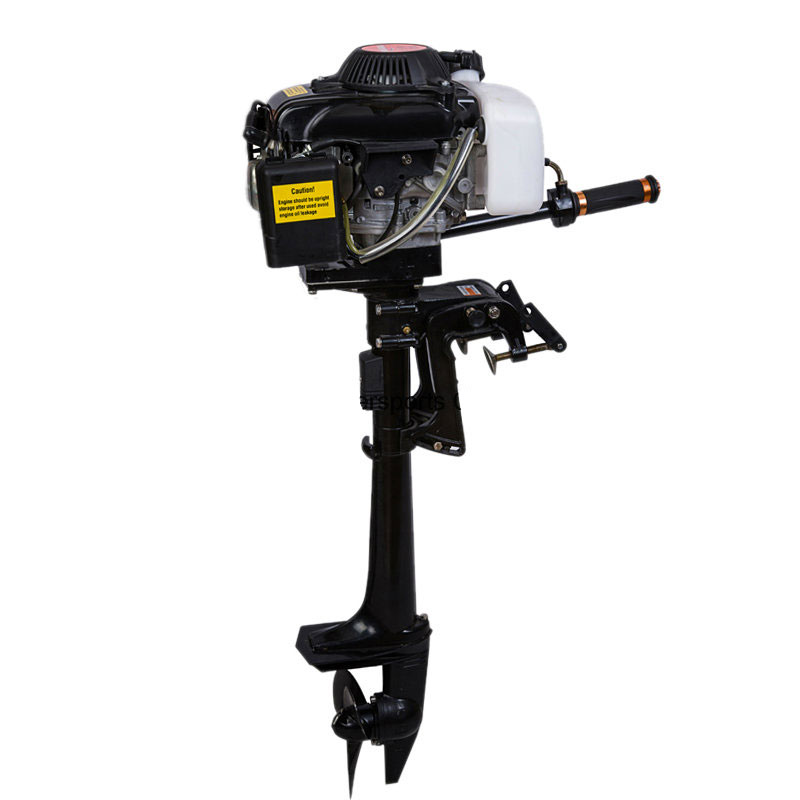
After agonizing over the little there is on the Internet and watching video after video (specifically, Youtube user Gurra has a great long-term series on this motor) I finally settled on the Hangkai 4 horsepower 4 stroke and pulled the trigger.  Now, there are subtle variations of this motor, but they are all basically the same. A Chinese Honda GXV50 4 stroke clone sitting atop what is said to be a Suzuki clone lower unit. Some are top exhaust, some are side (mine is side). Some are Hangkai branded, some are generic. But they are all built on the same platform. The genetics are good, but as we all know, anything from China can kind of get lost in the translation. 

I plan to do long-term follow ups periodically, so you can check back from time to time to see how it's going, so that others won't have to fly blind as I did. I got the motor from Walmart.com, which is handy, because if it's a total disaster, I can return it to the store in 30 days. I also got the 4 year plan from Allstate to cover any issues, because getting a warranty from the manufacturer/seller is completely hit or miss (don't get me started on Amazon-I'll save that for a later post). My general rule is, if it's over $150, and it's not a brand name I can easily pronounce, I'm getting the optional coverage.

The total cost was just shy of $350 with tax, free shipping, and extended warranty. It arrived in 3 days from a warehouse in New Jersey via FedEx, which was surprisingly good for them. Opening the box, it appeared to be in excellent shape. There was a motor, a tool kit, some spares (shear pin, cotter pin, etc), but no manual. From what I understand, this is not a big loss because the manual that ships with some is not helpful, and sometimes outright wrong. 


Unboxing. You get a tool kit, but no manual.

My motor looked completely generic. Not one word of English on the outside. Lots of Chinese. Everything else in pictograms...choke, a flaming triangle on the gas tank, etc. No horsepower markings anywhere on it. A curious thing...the gas cap has a pictogram for gas and oil...please be careful and realize that these are 4 stroke engines and you do not mix the gas with the oil. 

One of the issues that people have with this motor is that some ship with oil in the lower unit, and some do not. Also, some have a port in the lower that allows you to check, and some do not. Mine had no port, so the only option was to pull the prop and shear pin, pull the two bolts holding the gearbox cover in place, and pull that cover off. Luckily, mine had oil in it. Unluckily, I didn't realize that there was some compression within the gearbox that kept the gearbox cover from sitting flush. So, I put the first bolt in place and tightened it down, not realizing that the other side of the cover was not flush. So, when I started the bolt, it wasn't lining up correctly in the lower unit...and it stripped, the lower being aluminum. I tried several methods to fix it before I finally drilled it out, tapped it for a larger bolt, put that bolt in place and cut it off flush. I was then able to centerpunch and drill the new bolt hole to the correct size and replace the bolt. A moment of carelessness that cost me several hours time and a lot of headache. 

In the process, I destroyed the gasket behind the cover. Fortunately, there was another one in the tool kit provided with the engine. I'll be taking it back apart after 10 hours to replace the gear oil, because I have seen that recommendation somewhere on the Internet, so I'll probably buy some gasket material and cut a new one.

So, it was the next day before I was able to proceed any further. I filled the engine with 5W-30. It takes almost exactly 1/4 of a quart to get to the top of the full range on the dipstick. From what I've read, those that ship with manuals are completely wrong on this, leading people to over-fill the engine oil, which causes a lot of smoke in the best case scenario, or fouls the plug and possibly damages the engine in the worst. I had no such problems. These engines require high octane gas. I bought exactly $5 worth of 91 octane and plan to use that for the remainder of summer so I'll probably put some stabilizer in it. Of course, everyone recommends that you use ethanol free gas, but I've found that if you don't leave gas sitting in the tank or carb, you rarely have any issues running small engines on ethanol. 

Hour meter installed under the engine

One other thing I did...I added an hour meter. I highly recommend this for any small engine application, and I also did this on my Champion 1000 watt inverter generator. Basically, if it has a spark plug, you can add an hour meter to it. Just wrap the lead around the spark plug wire 5 times and run it to your meter, which can be mounted to any clean surface with some 3M tape. It takes the guesswork out of maintenance and makes it easy to keep up. Search eBay for "inductive hour meter" and you'll see items similar to the one pictured. I went with the cheapest and ended up paying $7.95 for mine. 

Mounted on the Sun Dolphin Sportsman 8

That done, it was ready to go. Since these engines are air cooled, you can do some testing with them on dry land. I put a splash of gas in the tank. Hit the primer bulb until I saw gas returning from the carb. Turned the choke on. The engine roared to life on the third pull. In less than 30 seconds, I was able to turn the choke off and let the engine settle into a nice idle. The drive system is clutched, so at low engine RPM, the prop does not turn. I varied the speeds to allow for a break in. Really, I need to run it under a load for a bit as well during break-in, so I didn't have it running for a long time. But, it ran. 

It wasn't the quietest thing I've ever heard, either. Other users extend and re-route the exhaust to quiet it somewhat, and I'll be doing the same. 

Some things to consider...the throttle does NOT stay where you put it. When you release the handle, the throttle returns to idle. Not super handy if you want to use the motor to troll while fishing, or if you want to reverse by spinning the engine around backward (there is no reverse gear). It really needs a weaker throttle spring, but it's also a safety feature, because if I should fall off the boat, the motor will go to idle and the prop (and the boat) will stop completely. Another thing, because of the side exhaust and the wiring/cabling, it is very difficult to pivot the handle over to use the motor in reverse. 

The brass screw that I assume adjusts high speed. Or, maybe not...

Sometimes, it seemed to be a little rough at higher RPM. Besides the throttle stop, there was only one adjustment on the carb that I could see...a brass screw right on the top. I gave it a 1/2 turn and it seemed to smooth out. Could have been my imagination, but it seemed to do better. 

Every hot start after that was effortless, choke-less, and on the first pull. It really is an easy engine to start. 

And that's as far as I went today. I hope to put the boat on the water sometime this week or next weekend to test real-world performance, and when that happens, I'll be back with an update. 

UPDATE: First test of the Hangkai in the water is in the books, and I'm still not regretting my purchase. I put the Hangkai on the back of my Sun Dolphin Sportsman 8 and took it over 3 miles upstream in my local river. The only reason I stopped was because I hit a set of shoals and I didn't feel like walking the boat up them. Otherwise, I could have kept going. 


The Hangkai performed as I would expect any outboard. Choke on the first start, single pull for every start after that. It does not use much gas. Yes, it's kinda loud, but it makes up for it by being slow. Honestly, this is not a four hoursepower engine. The Honda GXV50 is only rated at two, and I'm sure there's no magic in this Chinese design that doubles the horsepower. But, I was aware of that going in. The Hangkai would push the little Sun Dolphin up the river at 4-5 mph, according to GPS. I'm sure it went faster coming back down, but I didn't take a measurement. 

Other than an occasional stumble at part throttle, the Hangkai showed no issues. It started and ran every time I pulled the cord. I'll keep my eye on the stumble, but later in the day, that issue seemed to subside. 

So, the jury is still out, but I'm happy with how the motor is performing as of now. 

UPDATE: I ran into another boater who was using the Hangkai outboard. His was almost identical to mine but had a red cover instead of black. He told me he'd had his for two years and had not had a single issue with it. He said that earlier in the year, he had trouble starting it, but took the old gas out and replaced it and it started right up. He said that he did nothing special with the engine and stored it outside year-round on his boat. 

It's nice to get another data point. Seems these engines are more solid than many give them credit for being. 

Thursday, February 9, 2023

Ride 1 Up Core 5 750 Watt Class 3 Ebike Long Term Review


INSTANT VERDICT SUBJECT TO CHANGE:
The Good: Relatively inexpensive for the quality. Powerful. Reliable.
The Bad: Thermal cutoff can be a bit over enthusiastic, but it saves the motor. Why does it eat spokes? 
Verdict: If you want a cool looking, no frills ebike of premium quality for not-a-lot of money, this is the ticket. 

Earlier, I had a joke of an experience with a Chinese Vivi ebike that I got from Amazon. To be fair, there was only one flaw with the Vivi...the lack of overload/thermal protection. Had I known, I could have installed a 10 amp fuse between the controller and the motor, or the battery and controller, and it probably would still be running today. That was literally the only problem I experienced with it when I had it.

But, it was a big one.

This time, I was going to do my homework and make sure that I got something that the company would stand behind.

I read a ton of articles about budget ebikes and the Ride1up Core 5 kept coming up over and over again.

It was more expensive than the Vivi. In fact, about twice as expensive.

So, it should be twice as good, lol.

I read about Ride1up and their philosophy. They basically pick and choose solid quality components at a reasonable price and that's what goes into their bikes. There's not much proprietary on them, which makes them easy to work on should something go wrong. For example, the control display is a KD21C Adjustable Speed LCD. They're a common display and you can buy replacements on eBay. Same with the cassette, which is a 7 speed Shimano 11-32t. Also available on eBay. And of course, you can get replacements directly from Ride1up.


Complete specs.

So I sent them an email explaining my situation with the Vivi and asking how that would NOT be repeated if I bought from them. An excerpt:


Bottom line is, I would love to buy a Ride1up, but what happens if it breaks? How do I get it fixed? I literally live in the middle of nowhere. The nearest shopping mall is 60 miles away. The nearest bike shop is 40 miles away, and they don't carry Ride1Up bikes nor do they service them. I guess what I'm asking is, what if I have trouble during the warranty period? Afterward? How do you handle issues with the bikes? Also, is there some sort of thermal overload protection built into your bikes? Would it be possible to install a fuse somewhere to prevent the motor/controller from burning up like on my last one?

Their response:

We have a support team on staff available M-F 8-5 PST. You would be the eyes and ears, while they would provide the knowledge and know how. The better the pictures and videos are the better the support can trouble shoot and help if anything were to come up. We strive to keep our bikes on the roads, as that is where they belong! We have built them to stay there, so if you do come across any of the rare issues that pop up, we will work hard to remedy it. They also are willing to work with bike shops if ever your shop wants to keep up with the times and provide quality service to the future of biking. As for overload, we have fuses and protections built in :]


Bike shops around here are not an option in reality. They only tend to work on what they sell, which is fine. I'm mechanically inclined, so if I have someone to walk me through troubleshooting steps, I can probably get to the root of any problems. And from all accounts, this would be in my native language, not Chinglish.

So, I got the bike. Price delivered was $1005 after a coupon code. Very reasonable as far as ebikes are concerned.

Waited, waited, waited...FedEx...that's a completely different story. But anyways, I came home one day to find the bike out on the porch.

People complained that it was relatively "unassembled" when they got it. It was, but no worse than I would have expected. It's a bulky item shipped in a large box, but still has to be compact enough for relatively easy handling.

I had to install the front wheel, fork and handlebars, the crank, the pedals, and the seat. Instructions were mostly clear and I had no problems. The rest of the process was adjusting, which was not difficult either.


As I assembled it, I charged the battery so I could immediately take it out for a ride.

Throttle rolls in exponentially, which makes it seem slow at first, but when I got on it, it kept accelerating and accelerating. I'm a big guy, so it takes a bit to get me up to speed, but the motor is torquey and pulls just fine once you get it rolling. 750 watts moves things along nicely. Pedal assist seems to kick in more immediately than the throttle does making it easy to squirt across intersections in town.

It's pleasant to ride and feels solid. The gear selector and brakes were easy to adjust and setup with minimal watching of Youtube videos. The shift indicator matches up perfectly with the gears (like, when the arrow points to 1, you're actually in 1st gear, etc).

Brakes are highly effective. Some criticized the lack of hydraulic brakes, but they are plenty good enough.

The Core 5 is supposed to top out at 20 on throttle alone, but the motor usually cuts at 22. On pedal assist level 5, I can easily get 25-30 mph and keep up with traffic in town. It feels fast.

Range is excellent, but the battery does suffer from voltage lag. What seems to happen is that the battery goes from 5 bars to 2 rather quickly, then stays on 2 bars for a LONG time before dropping to 1. At first, I thought my battery might be a dud. Turn off the power for a bit and the battery creeps back up a bar. Riding on throttle alone, and admittedly hammering on it as much as possible, going between 15-22 mph, I can easily get 16 miles before battery cutout. I've never run it to empty while "taking it easy", but keeping the speeds to around 10 mph got me 17 miles with 2 bars of battery remaining. 20 miles on a charge if you were at all careful would be no problem.

Probably the only thing I miss from the old Vivi is the front shock. The Core 5 can be a little rough on unpacked or unimproved trails. You can ride them, but it's best if you go slow.

As for the motor protections...twice I've had them "kick in" and prevent an overheat/meltdown situation. Both have happened when I kept the motor at a sustained high speed for a long period of time. The most recent was yesterday.

A buddy and I went for a 12 mile ride on a local trail. He arranged for us to be picked up by a somewhat sketchy aquaintance and shuttled back up to the start point where our vehicles were parked.

I figured there might be issues. Instead of waiting, right before we got to the end, I turned and rode the 11 miles back up the trail on battery power alone. I set up a makeshift cruise control earlier and had set the speed on about 16 mph. About 43 minutes in, the motor hit thermal shutdown.

I started pedaling. As I pedaled, I powered down the controller and powered it back up. I set the cruise for 10 mph and made it the rest of the way with no further problems and I never had to stop the bike. Within a minute or two, I had the speed back up to 15 mph or so.

If I hadn't owned the Vivi, I would view that as an annoyance. But now I'm almost thankful. It's MUCH better than the alternative...when this happened with the Vivi, the "thermal shutdown" consisted of melting down the motor itself...which I was never able to get fixed.

I beat my buddy back to the start point. To be fair, his guy was 1/2 hour late. But, I had no problem going 11 miles in 45 minutes or so. According to my GPS, I averaged about 14 mph, even after the shutdown.

With the Core 5, you can monitor wattage output from the motor. When I was doing 16 mph, the wattage varied between 30-60 watts. When I slowed to 10, wattage dropped to between 10 and 15 watts. Huge difference, both with battery consumption and stress on the motor. Hence why I said 20 miles would be no big deal on battery if you stayed around 10 mph. (CORRECTION - I thought there was a decimal point, but there wasn't. Actual wattage was 300-600 watts at 15 mph, and 100-150 watts at 10 mph. This makes more sense).

You can also adjust the wattage output in increments all the way down to 300 watts max to prevent hitting the overload to begin with. Of course, lowering the wattage will kill your top speed...

I'm at well over 1000 miles on the Core 5 as of the date of publication. One thing that I have noticed is that the bike tends to eat rear spokes. So far, I've broken 3. This might be user error due to not tensioning spokes correctly, or it could be because the 750w motor is powerful enough to overcome the strength of the spokes. But I've never had it happen on any other bike, even the two other ebikes I have had experience with. 

Other than that, just minor adjustments and maintenance. I'll soon be coming up on a year with this bike and I'm still very happy with how it functions. 

The Indio Telecaster Classic- A lot of guitar for $100


INSTANT VERDICT SUBJECT TO CHANGE:
The Good: Looks, feels and plays like a much more expensive guitar. Neck is amazing. Price point allows upgrades. 
The Bad: The pickups sound good but the output is weak. 
The Verdict: You want to try out a Tele but don't want to break the bank? Here's your next guitar. 

A while back, I got this Indio Telecaster to satisfy my itch to have a Telecaster for recording. 

If you're looking for a brand new guitar to use as a backup or for a beginner, you can't go wrong with this one. It's also an excellent platform for modding to get a Tele style guitar that's exactly the way you want. 


Fit and finish are great. Sound is good, but the pickups could be hotter. On the other hand, they have a really smooth and mellow tone that sounds great on recordings. 

The neck is wide and comfortable, and the grain in the wood is top notch. 

Honestly, the only thing one might need to do to make this a seriously good instrument is upgrade the pickups to something with a little more power. Everything else is playable right out of the box. The guitar intonates well, stays in tune, and plays nicely.

I've owned this guitar for several years now, and I find that I go to it more than some of my more expensive guitars. It just sounds good and plays very nice. I would definitely recommend it to anyone interested into getting into guitars, or if you're a serious player looking for a cheap second guitar or a platform for modifications. 

You can find the Indio for around $100 on sale from various places, including eBay and Amazon. 

Saturday, May 30, 2020

The Steak Ninja. Gimmick? Good to Go?

INSTANT VERDICT SUBJECT TO CHANGE:
The Good: Cheap. Seems to work. 
The Bad: Hard to clean. 
The Verdict: At this price, what do you have to lose?

I like steak. If it were up to me, I'd eat it several times a week. But, good steak is expensive, and steak cheap enough to eat several times a week is better suited for covering the seats in a fine luxury car.

I experimented with a couple of different ways to tenderize a cheaper cut of steak to make it more edible.

Brining was the first. Simply putting a generous coating of kosher salt on both sides of the meat and letting it set did make it more tender. But, it wasn't a huge improvement and it made the meat overly salty in places, even after thoroughly rinsing.

I tried Sous Vide, and while I like the results of that for many things, steak is not one of them. It simply doesn't have the same flavor as a steak seared in cast iron or fast-cooked on a grill.

Finally, the Steak Ninja.

First off, the box contains several words and phrases that I like. Ninja, kick-ass, and meat. But wait, there's more!

When you press this into a piece of meat, those 56 blades penetrate and cut through the muscle fiber. Basically, it gives you a head start in the race to chew your own food. 

The Steak Ninja is a version of a device called a jaccard, which has been around for a while. So, even if you haven't heard of it, it's not exactly innovative. But, it was cheaper than any of the other jaccards that I saw for sale on Amazon. 

The blades are flat and directional. Meaning, you can run the Steak Ninja many times in different directions to make the meat more tender. 

Don't play around with it. The thing is dangerously sharp. Also, make sure you know your target and what's behind it...lol. Most often, I use the Ninja while the meat is still in the foam pack to ensure that it penetrates all the way through. But, you'll want to do this on a cutting board, not a formica countertop. 

Side effects: Thin cuts of meat become thinner. Figure a 3/4" steak becomes 1/2". You'll have to adjust your cooking times accordingly, or buy thicker meat. The last time, I used it on a 1.5" sirloin tip roast and the finished product came off the grill at approximately 1" thick, which was perfect. 

Other side effects: the meat will cook quicker. People say this is because the heat penetrates the meat through the holes, but I think it's because the meat ends up thinner. 

Things I thought would be a problem, but weren't: I figured this would dry the meat out. I've heard for years you're never supposed to use a fork to turn steaks on the grill, because any holes you poke in the meat would allow all the juices to get out. And now, with the Ninja, I'm poking 56 holes at a time in it. That didn't hurt the steaks at all. In fact, if anything, meat prepared with the Ninja comes out juicier than normal. I don't know why, but it's always good. 

Things I didn't consider would be a problem that are:  Cleaning. You have to hold the thing open by hand to get to the blades. The first time I did it, I got an inadvertent blood sugar test in the tips of two of my fingers. You REALLY have to take care to get to the blades. You can lock it closed, but you can't hold it open, so you're grabbing it tightly with one hand and cleaning with the other (I used a nylon bristle brush). 

That aside, all of the steaks that I've done with this have come out way more tender and tasty than they had any business being. I got a chuck shoulder steak (not a Flatiron) and it was tender and juicy. So was the aforementioned sirloin tip roast. Very good texture, with minimal toughness. 

Here are the pros and cons of the Steak Ninja. 

Pros: Easy to use. Cheap. Actually works. Maybe fun, too, if you're a bit sadistic. 

Cons: Thinner steaks. Does take some time to do multiple steaks. Dangerous to clean. 

All in all, if you're wanting to eat steak more, and your budget won't allow, this might be a worthwhile investment. 


Product Review: Black and Decker LSTE522 20V String trimmer

My first electric trimmer was an old Black and Decker with a built-in lead-acid battery. It worked OK, but it wasn't super powerful and it came off charge one winter and the battery was destroyed. 

My second attempt was an 18v Grass Hog. That thing served me admirably for 9 years, until the motor finally gave out. I bought another just like it used on eBay which lasted me another two years. 

I was reluctant to switch to 20v because I had so many tools that ran on 18v. And, I didn't want to be using two sets of chargers and batteries during a transition. 

Ultimately, my wife forced the change on me by getting me a Black and Decker 20v tool set for Christmas. I had no choice but to upgrade. 

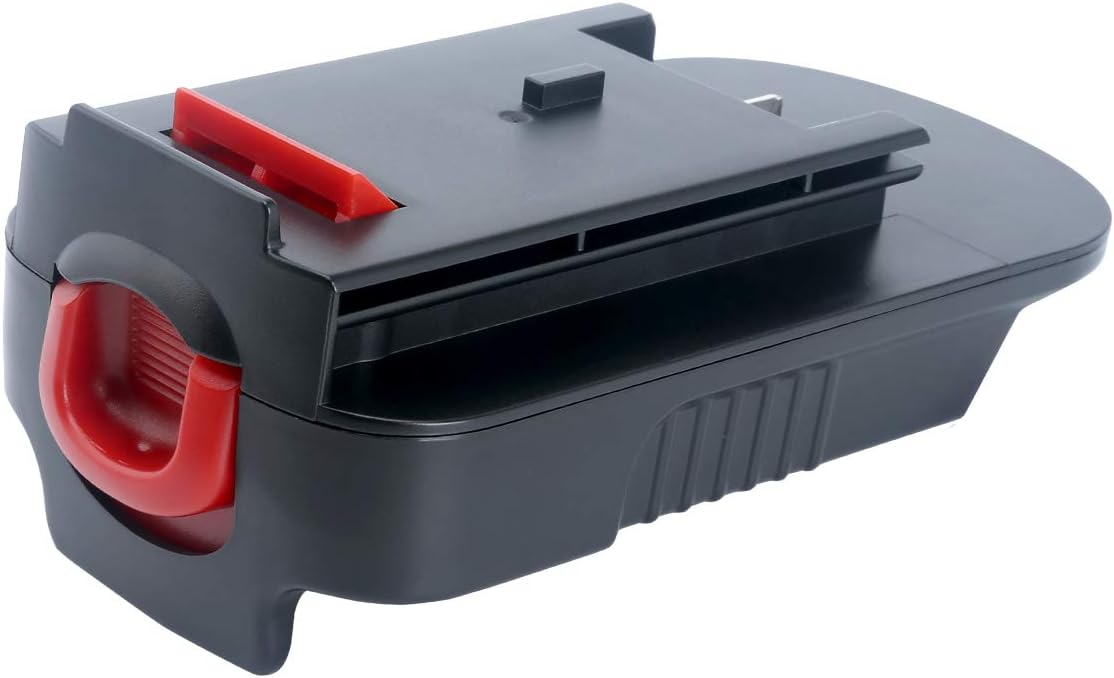
In the meantime, I found a handy adapter that lets you use your 18v tools with the 20v batteries. 

That was all it took. Now, I could standardize everything on one battery type and charging system. 

So, when my old 18v trimmer gave out this spring, I knew it would be no big deal to get a 20v upgrade, which is exactly what I did...

Behold, the LSTE522 trimmer from Black and Decker. This thing is so much better than my old 18v system. 

First, the torque. It's still not what a gas trimmer would be, but it's pretty darn good. You can clear lightly overgrown areas with it without much trouble. 

While it has more torque, the supplied line doesn't work really well for tough stuff. My advice would be to get a shaped line for it. I use a square 0.65 line and it performs much better. 

It has a line feed switch which seems to work pretty well. It also has an edging wheel, which I haven't had a chance to try. 

The hold position is comfortable, but your finger does get tired from holding the trigger. There's almost no travel to the trigger, so if you're not paying attention, you can let it off really easily. I'd rather the spring loading be a little lighter and have the trigger's travel be maybe 1/4" or so. 

My biggest complaint is one that I often have with tools of any type...they're not sized for a person over 6' tall. This is no different. The shaft extends pretty far, but I still have to hunch over to trim, meaning a sore back after a while. 3" more length would be welcome. 

The standard B&D batteries are good for about 20-25 minutes run time, which is adequate to do a small yard. Do yourself a favor and get a higher amp battery, especially if you've standardized on the 20v system.  I have a 6 amp battery, and this morning, I cleared two abandoned front yards with it in my neighborhood and had enough battery left over to knock down the grass in my front yard when I was finished.  Total run time was about 75-80 minutes. 

That same battery will run the 5" circular saw, utility saw, or drill all day long. 

No need to pay full price on the batteries. I have been buying Powerextra aftermarket batteries for years and have had good results. You can get the Porter Cable models, and with a Dremel and 5 minutes, you can modify them to fit in either the Black and Decker or Porter Cable tools. This is handy for me, because I have a Porter Cable brad nailer that also works on 20v batteries. 

I plan to buy the optional Mower Deck for this trimmer as well. 


It snaps onto the trimmer and converts it to a 12" mower. It would be perfect for my small front yard when I don't want to drag the gas mower out. 

I'll keep you updated. 


Friday, August 3, 2012

UPDATE: Further testing with the AR 15 and Tula Steel Cased Ammo

If you'll recall, I was experimenting with my AR 15 that tended to be a little cranky with steel-cased ammo.  Previously, I'd run about 150 rounds through it using a ratio of 1 brass to 10 steel cased rounds and found some success.  I finally succeeded in getting back out to the range yesterday to do further testing.

Although I didn't get to shoot as much as I wanted, I still think my results are significant.  I put an additional 50 or so rounds through the AR, which operated without a hitch.  I still haven't cleaned the gun.  Before shooting, I opened it up, and true to the Tula reputation, the insides were quite filthy.  Nevertheless, the gun operated reliably and I experienced no malfunctions of any kind in the entire 50 rounds.

For the record, that's nearly 200 rounds of steel cased ammo that I've fired through my gun.  Before I started mixing steel and brass, the same gun would malfunction on steel ammo, almost like clockwork, before I could finish the third mag.  Usually, the stoppage wasn't fixable without a cleaning rod.

Although my methods are not even close to scientific, they're good enough for me.  Yesterday, I also bought a few more boxes of steel cased ammo, which I intend to keep shooting (for cheap).

I'm going to continue this test.  I want to run the AR to failure using this dirty, cheap, steel cased ammo, performing no maintenance except for oiling with Mobil 1 synthetic 10W-40, my preferred lubricant of choice.  People may laugh at this, but I've had excellent results.  The oil stays where I put it...even after many rounds, when I open up my gun, the internals are still thoroughly coated with oil.  There's little to no cook-off, even on the back of the bolt where most of the heat and carbon usually build up.  And, the anti-deposit nature of synthetic oil means that most of the gunk is actually suspended in the oil, not fused to the metal parts of my gun.  It just works.

I figure if it holds up for a 1,000 rounds with dirty Tula, it should be just fine to shoot that much or more of brass without worrying about a significant malfunction.


Tuesday, July 31, 2012

Cinnamon and MATE on Linux - get your Gnome 2 back!


You can imagine the disappointment that many Gnome fans experienced when Gnome decided not to be Gnome anymore, and Ubuntu decided to enter the desktop environment wars with the ironically named, "Unity", which has divided users into several opposing camps regarding desktop environments.  Regardless of your pick, one thing was certain...Gnome was gone and wasn't coming back.

Or was it?  From the instant that Gnome decided to become a cell-phone interface, and Ubuntu followed suit, some intrepid developers decided to save the Gnome we knew and loved, or at the very least, a Gnome-like interface.  The result is two desktop environments that are very similar to Gnome 2: MATE and Cinnamon.

 Cinnamon, tweaked to look like Gnome 2

The default Cinnamon, when running on Linux Mint, follows a Windows paradigm with a toolbar at the bottom and a "start" menu on the left.  It can be configured with top and bottom menu bars, and offers an "Applications Places System" menu, just like classic Gnome.  You have to configure it this way, but it can be done.

 MATE, tweaked to look like Gnome 2

MATE looks almost exactly like Gnome 2, but again, on Mint, requires some changes to replicate the good ol' Gnome desktop.  After some tweaking, it feels just like Ubuntu 10.04 or so, and works just like it too.  The only difference I could see is that there's not a User menu on the top right that gives you IM, social media, and media player status like the old User menu on Ubuntu did.  Not a deal breaker, though, as most other Gnome functions are duplicated rather faithfully.

So, which do you choose?  If you want a desktop that replicates Gnome in look, feel, and function, and lots of configurability options, you'll want MATE.  I tend to think of it as a "Gnome 2 Legacy" desktop.  It seems to be a bit less buggy on my system, although your results may vary.  Cinnamon, on the other hand, would be good for someone who would like to use a "Gnome 3 Classic" style desktop - meaning, a desktop that follows the Gnome 2 paradigm, but adds lots of cutting edge features, although you sacrifice some ability to customize (the only option in the Appearance dialog is to reset the wallpaper)  You'll still feel like you're using the next, fancier version of the classic Gnome Desktop.  And, I expect Cinnamon to be better in the next version.

The only bug I experienced with either was with Cinnamon.  Every time I started Google Earth, I got a "phantom window", that opened in front of the tool bar at the top of the application.  There was no "x" to close, and the window would not move or resize.  The only way I found to fix it was to log out and log back in with MATE.  As a result, I've stuck with MATE and it has worked well for me.

The beauty of Linux is that you can try either one.  In Mint Linux, you can look for "mate-desktop-environment" or "cinnamon" in Synaptic, or open a terminal and type, "sudo apt-get install mate-desktop-environment" or "sudo apt-get install cinnamon".   There are also ways to add either environment to an existing Ubuntu install, but those methods are more involved than I wish to go into here.  Use your Google-Fu. 

So, if you think that Gnome 3 and Unity are complete wastes of time, install Cinnamon or MATE and start tweaking.  You'll be home in no time.

Tuesday, June 19, 2012

Netflix on Linux Desktops...it's PAST time!

I recently thought about opening my own Netflix account, since several of my friends use the service and enjoy watching movies on it.

I've been using Linux almost exclusively since about 2003, and I haven't really had to worry about compatibility issues with various on-line services since 2008 or earlier.  Even ESPN3 (or whatever it is called this week) works just fine on Ubuntu, so I thought that the days of complex workarounds and running WINE or virtual machines was over for the most part.

There seems to be one holdout that is still stuck in 2001, however, and that is Netflix.

Let me state unequivocally that there is NO excuse, here in 2012, to leave any major platform out of any on-line service.  EVERYTHING can run on Ubuntu/Firefox/Chrome these days.  I can run Google Earth, Google Voice, Hulu, Google Docs, and most other major web based services without issue.  Even many Microsoft services run just fine, which is surprising considering the history between Microsoft and Linux.

Netflix's stubbornness about refusing Linux support is just laziness.  Even my son's PlayStation 3 and Nintendo Wii both offer support for Netflix, but there is still no support for Netflix on the Linux desktop.

Inexcusable, but not surprising, considering Netflix's past bumbling and missteps.

Considering that switching to or adding Linux is relatively easy and almost always free, the users number in the millions.  You'd think that Netflix, by writing a few lines of code, would want to open up this market of potential customers.  ESPN3 did so, and as a result, I patronize their services. So do scores of other Linux users that I've talked to. And, apparently, someone inside the company thinks that the Linux crowd is worth the money, or at least they did at one point.  Why the change of heart?  Even worse, why insult us by promising us something and then failing to deliver?

Most people who know enough about computing to use Linux also understand that platform compatibility is a relatively simple issue these days.  They also are the type who will make a stand not to buy a product that won't work with their system on general principle. 

The bottom line is, I'm sitting here, dying to give Netflix my money to use their service.  Too bad they don't want it.

If you agree, give 'em a call: 1-866-579-7115.  If that doesn't work, try this, from one of the most valuable sites on the Internet: Contacthelp.com's Netflix page


Sunday, May 20, 2012

The AR-15 and steel cased ammo - how to make Wolf or Tula shoot reliably.

We've all been there...walking around the local gun store (or, as I like to call it, the Magic Goody Shop) and seen Russian-made steel cased .223 ammo selling for quite a bit less than the brass versions of the same rounds.  And, many of us have fallen to temptation and bought scads of the stuff, thinking of how much money we'll save, and how we can plink 'til our heart's content for pennies on the dollar.

And then, many of us have faced the bitter disappointment of repeated malfunctions and losing money when we give away a large pile of ammo that simply won't function properly in our guns.

I've seen quite a few stories of people trying to shoot steel cased ammo out of an AR-15 rifle with less than satisfactory results.  The most common issue is the dreaded "stuck case", where the case wedges itself so firmly in the chamber that the extractor simply doesn't have the "oomph" to move it.  In fact, most often, the only remedy is to put a cleaning rod down the bore of your gun and whack it with a hammer.

That's what I had to do.  My AR was particularly finicky, barely firing 50 rounds of Wolf or Tula before hanging up completely, bringing an early ending to a day at the range.  The thing would run like a champ all day long on brass, even crappy brass, but a couple boxes of Tula would bring it to its knees.

I began reading about this on the Internets, and it is a common problem.  Many have the completely WRONG idea about what causes this, however.

First, it is NOT caused by a "lacquer coating" cooking off and leaving its residue in the chamber.  If you don't believe me, get a spent shell and hit it with a blowtorch.  Nothing's coming off of that sucker.  If you've bought your ammo in the past few years, it doesn't even have lacquer on it.

Second, many people believe it is because the steel expands, and, being less flexible than brass, wedges itself in the chamber.  That's not true either.  But, steel being less flexible that brass does contribute to the problem.

The answer is simpler (and fortunately more correctable) than either of those.

Steel doesn't expand like brass does in the chamber.  This allows a slight gap around the cartridge case upon firing.  That gap admits powder residue and carbon into the chamber, which begins building up on the sides.  Pretty soon, the dimensions of the chamber are too small to allow the casing to move freely in and out.  The next time the bolt slams a round into the chamber, it wedges there, unable to be moved without physical intervention.

"Well," you might say, "the 7.62 x 39 rounds that I shoot are steel cased, and they don't have that problem".  No, they don't.  But, it is not because the blowback of residue into the chamber isn't happening.  It is because of the shape of the round itself.  The sides of the 7.62 x 39 are tapered enough that they can still overcome friction with the sides of the chamber.  The .223 is far straighter, and so it is far more difficult for the extractor to overcome the frictional forces of the now smaller chamber that has a good hold on the straight walls of the shell case. 

This is the problem I had with my rifle.  On multiple occasions, always after firing less than 50 rounds of steel cased ammo, I have had a major stoppage with my AR.  It always involved a spent case hanging up in the chamber, it always was impossible to clear without jamming a cleaning rod down the barrel and knocking it out, and it almost always put my AR out of action until I could take it home and work on it.

Once, while in the presence of a buddy of mine, I experienced the problem and he said, "You need to run a little brass in every mag to keep it cleaned out."

That didn't make sense to me.  How did brass keep the action clean?  Besides, common knowledge was that you never mix steel and brass when shooting...that mixing the two would only make this problem worse. 

Then I read this article on the Box O' Truth about steel case and brass cased ammo.  Although their hypothesis confirmed my friend's statement that brass ammo could help clean the chamber, they stopped short of recommending (or figuring out) that running steel and brass together can make a gun run more reliably.

I figured it was up to me to test it.

I started by cleaning the chamber thoroughly and soaking it down with CLP.  I then loaded my mags with one round of brass case for every 9 of steel.  Then, I headed to the range.

Fully expecting to get a stoppage before the end of mag number two, the AR kept eating the steel case well past that point.  The brass coming out eventually carried a considerable amount of black deposit on the outside of it.  It was rock hard and couldn't be scraped off with a fingernail. I did a variety of shooting, including slow firing (shooting once every 20 seconds or so), sustained slow firing (shooting once every five seconds),  fast firing (shooting as fast as I could pull the trigger) and even some bump firing (near automatic rates of fire).

The AR had two hiccups, probably attributable to the Russian ammo's lower power.  On the first, the round didn't quite come all the way out of the mag.  I gave the bottom of the mag a whack and it kept going.  The next, the bolt didn't appear to come back far enough to grab the next round.  A quick pull of the charging handle fixed it. The gun seemed to run fine otherwise, and most importantly, no casings were getting stuck in the chamber.  After five mags and nearly 150 rounds, I was running out of time and would be late for another engagement, so I packed it up to continue testing later.  Besides, the gun showed no signs of slowing down.  I was satisfied.

I have seen other options recommended, such as changing uppers or barrels to get a chromed chamber, or using a chamber reamer.  Both would probably work, but for the occasional use of steel cased ammo, both seem to be overkill. A 100 round box of cheap brass cased ammo should let you shoot 1000 rounds of steel case, if this method works for you.  You might even be able to tweak the ratios and get away with 1 for 20 or 1 for 30.

If you have an AR that doesn't like steel ammo, but have a stockpile of it or have a source where you can get it for cheap, it's worth a try to mix some brass in with the steel and see if your AR will run it.

Saturday, October 22, 2011

UBUNTU - PLEASE DITCH THE UNUSABLE MONSTROSITY CALLED "UNITY".

I've spent the morning just trying to get Unity to work. It's horrible. I can't understand any of it.

The whole point in a UI is that a person should be able to just sit down, and within a few minutes, figure it out. You simply cannot do this with Unity.

I just can't understand why the folks at Canonical would want to kill their disto like this. It is truly horrible to the point of being unusable.

I tried to do one simple tweak of moving the window buttons from the left to the right. It didn't work. Now, half the time the buttons are on the left, half of the time they are on the right. WHY?

With an old download of Ubuntu and the Gnome desktop, I could make my UI look EXACTLY the way I wanted it to. I could make it work for me. No longer the case.

I will never understand how taking away or hiding options is better for a user. Makes no sense at all. Now, I'm crippled.

The bad part is, I used to be able to just choose to use the classic Gnome interface. No more. Gnome 2 isn't even available.

Horrible. I'm convinced the people at Canonical are just stupid. They HAD the best Linux distro on the planet. No more.

Unity sucks. A lot. And, they're trying to force it on me. Forget that. I'm going elsewhere, and I'm recommending everyone else do so as well.

Monday, December 28, 2009

Kel-Tec P32 Review - Mousegun Mirth!

.32 Auto Keychain


Words cannot describe how happy I am so far with this gun.

Yeah, it's that good. And it is so good because it is so surprising.

It is not surprising because of it's superior Browning design (I don't know of another tilt-barrel pistol of this size), because it shoots a decently powerful .32 cartridge and yet manages recoil very well, because it is less than 7 ounces, five inches long, and less than an inch thick, and practically disappears in a pants pocket. It is not even good because it is reliable and acccurate.

It is surprising because it manages ALL of these tricks at once. This is a gun you can carry when you don't want to carry a gun. Stick it in your pocket, and it disappears, not to be thought of until you need it, or you get home and empty your pockets.

Now, there are people who look down their noses at the .32 auto. I agree. Although I regularly carry a 9mm, I sometimes feel that isn't enough gun. And, it a perfect world, I wouldn't consider anything less than a .40.

But, every one of those other guns has serious drawbacks to carrying. My full size 9mm, the Bersa Thunder, can be carried in an inside the pants holster, but the handle often prints through whatever shirt I wear over it. Plus, after a few hours, it tends to become uncomfortable.

I also have a Kel Tec P40, which I carry in a separate waist pouch. The waist pouch works great, but you have to deal with the extra bulk of carrying something "outside" your body. Also, access isn't great, because you still have to unzip it to draw your weapon.

But, when you shove the P32 in your pocket, it is as accessible as anything else in your pocket. And, no one will ever know you are carrying it.

It beats going unarmed, and that's the point. As a friend said, it beats throwing rocks.

Or, as I like to say, I don't know of a gun with which anyone would like to be shot. Any gun is better than no gun.

But, that's not to say that this is a bad gun.

The Kel-Tec is surprisingly accurate and smooth. I could punch holes in a tin can with reasonable regularity out to 10 yards, which is all one can expect for such a weapon. It cycled reliably with everything I fed it, except for some old, old rounds that actually had corrosion on the outside of the cases. On one, it struck the primer but the round didn't go off...not the gun's fault. On another, the last round wasn't powerful enough to push the slide back far enough to lock. Other than those (obviously ammunition related) minor issues, there was not a single problem.

Despite it's ultra light weight, the Kel-Tec was comfortable to shoot. I had initially avoided getting one of these for my wife because of reports that the recoil was stiff. I went with an AP-MBP .32 for her instead. But it seems to me that the Kel-Tec doesn't really recoil any more severely than that gun, despite being half its size. She could shoot it easily, and she had no problem racking the slide. She liked the way the Kel-Tec felt in her hand, and of course, it's "cute". She might end up taking it from me.

Guys...if you have a significant other who can shoot any handgun above a .22, rest assured that the Kel-Tec will be no problem for her.

Conclusion: The Kel-Tec will probably start going with me everywhere. I might carry it by itself, or as a back-up-gun, but it is so light and convenient, there is no reason NOT to carry it around with me everywhere. What is surprising from something this small and inexpensive ($249 at the local sporting goods store) is that the Kel-Tec is a real gun...not just a novelty that doesn't deliver on its promise.

Friday, December 11, 2009

Why I Am Beginning To Hate Dish Network...

During the past week, we had some severe winds. My satellite dish got knocked out of alignment, so I went online to request a service call.

As I was on the Dish Network site, I figured I might as well browse around to see if I wanted to change my service.

I have the 250 channel Gold package, and thought about downgrading to the $10 cheaper Silver package. But, as I started pricing the different packages, that they obviously don't want you to know what you will be paying for satellite service! Look at this:

Here's the price of the Silver package as displayed on Dish's front page:


And, once you log in, the price changes:


I understand the idea of luring in customers with reduced rates, but then, you go to the page where you add or remove services, and you see this:


Why the difference? And, perhaps the best part...my invoice:


One company, four different prices for the same service. Dish Network has NEVER been able to adequately explain to me how their billing is set up. I suspect that they don't know either. If they did, they might actually have to explain options that would save their customers money. And we can't have that...

Sunday, November 29, 2009

The $5 Camera...Mamiya 1000 TL

I learned photography on an old Praktica LTL that was my dad's. He used it the whole time I was growing up to take pictures of my family, our vacations and everything else. The old M42 screw mount body was built like a tank and took great pictures, and it's humble origins in communist East Germany ensured that the price was right. It was the perfect camera for a college kid wanting to learn how to take good pictures, and I used it to great effectiveness back in the early 90's.

Alas, the old Praktica doesn't work so well anymore. The mirror is really dim, the film advance doesn't seem to work correctly, and the focus ring on the old 50mm Pentacon lens is so stiff as to be unusable. I retired it several years ago, after it shot a roll of film and left huge gaps in between the pictures, meaning I got several shots that were halves of two other shots! Disappointing, but the Praktica had more than done it's duty. I still have it, and will never get rid of it, but it is retired for good.

So, during a recent vacation to the Outer Banks, you can imagine my great joy when I found an old camera bag in a thrift store, tucked into the back corner of the room. I opened it to find this:


I wasn't familiar with the 1000 TL, but I was familiar with Mamiya. Before digital, I can remember salivating at their medium format stuff. At $5, the 1000 TL didn't even warrant testing. I figured if it didn't work, I could put it on eBay as a parts camera and at least make my money back.

I began looking around in the bag, which looked to be mid sixties vintage (the 1000 TL was made from the late 60's through early 70's). There were several vintage Hoya filters, a lens hood, a bayonet mount converter (to what, I have no idea), and a Soligor 135mm f/2.8 lens. Hoo boy. Jackpot.

But, when I got it out of the store, I discovered that the light meter actually worked. The shutter snapped crisply, and everything seemed to be in order. Best part was, it was an M42 mount, just like my old Praktica, so all my old lenses and teleconverter would work.

By today's standards, nothing in this kit is impressive, but back in the day, this was a solid piece of photographic equipment. It has shutter speeds from 1/1000 all the way down to 1 sec, plus B. I already have a shutter trip cable that can lock open the shutter for any amount of time I want. It has a self timer which will trip the shutter after about 10 seconds. It doesn't have a hotshoe, which is perhaps the only thing lacking that I really could have used, but since I don't plan on shooting indoors much with this camera, it's not really a problem.

It looks very clean inside and out, although, as is common with cameras this age, the light seals look cruddy. I've already ordered some black string and light seal foam to completely redo the whole thing. Nevertheless, I have a roll of Superia Xtra 400 in it right now, just to see if this thing works or not.

Regardless of how it turns out, I'm pretty happy to have found this. If it works well, it will be all that much better.

Monday, November 16, 2009

Hi Point C9 Review...A Lot of Time and Effort, Very Little in the Way of Results.


I had rotten luck with the Hi Point C9. That might make some mad. Heck, it makes ME mad! But, the truth is the truth.

I tried to like the C9, which is Hi Point's 9mm pistol. I really did try to like it. I bought an extra mag for it to try to make it work better, but it jammed. I sent it back to Hi Point to see if they could get it to work. They did some work on it, declared it cured, and shipped it back. It still jammed. I took it apart and polished the feed ramp, adjusted the mag lips, replaced the magazines, replaced springs, etc. It went from jamming to the last-round-hold-open (LRHO) activating before the mag was empty.

And, it was a crying shame, because the little C9 is about as accurate a 9mm pistol as you'd ever want. It was so easy to put round after round into the same hole (or nearly so) time after time. On the impromptu target you see above, the two shots on the right are the "sighting in" shots. I gave the rear sight a couple clicks to the left then proceeded to shoot the rest of the rounds that hit in the middle. Nice.

But, I had to quit kidding myself. All the tweaking, all the work, all the parts changes just didn't seem to make a difference in this little gun. And as much as I hate to say it, and as much as I want it to work, it is getting to the point where I'm putting a lot of time and effort into this gun and not getting much in return.

Before you start saying that I'm being unfair, keep in mind that I have had this gun for almost a year, and I've really stuck with it. Before you accuse me of being a snob against cheap guns, remember that I bought my wife an AP-MBP .32 for just over $130 with tax, and it is a fine weapon. Before you accuse me of being an anti Hi Point bigot, please find my post where I review the JHP .45 and sing its praises. Also, understand that I have a 995 Carbine in my stable. It is tricked out with an ATI stock and dual mag holders. It is one of my favorites, and rides in a shorty case along with my pistol grip Mossberg (I call that my "riotpak").

And yes, I've seen this:


And believe me, if my C9 performed like that, I'd never think of getting rid of it.

Maybe next weekend I'll give it one more shot. They say that the C9 is very sensitive to how you grip it. I don't think this has anything to do with the slide locking open, but you never know.

Depending on what happens, I might just have a gun for sale next week.

Sunday, November 15, 2009

Bersa Thunder 9mm HC Pro Review (and comparision with the Ruger P89).


After a lot of effort, I finally got it! Surprising how difficult it is to find one of these things, but after much perusing of on-line gun classifieds, I finally snagged this one from GunsAmerica. As I review this gun, I'm also going to make some comparisons to the 9mm that used to be my main auto, the Ruger P89.

First, a little background. Both of the pistols have roots in military or law enforcement service, as well as origins with legendary firearms manufacturers. The Bersa is the service pistol of the Argentinian National Gendarmerie (police force), and while Bersa might not be a name with a pedigree, the Thunder 9 is based on the Walther P88 design, and the manufacturing seems to be solid. The Ruger's reputation comes simply from being a Ruger. They have been known for making tough, reliable firearms with anvil like durability. And most people DON'T know that the Ruger P85 (an early version of the P89) was a principal competitor when the military was looking for a replacement for the venerable 1911. It was actually created to fulfill that contract, so it was designed from the ground up for rough treatment and problem free operation. Although I'm pleased with the Bersa, I haven't owned one for ten years as I did the P89, so I can't speak to long term reliability. The P89 never failed me once during that time...not one mis-feed, jam, or breakage of any kind, even after thousands of rounds. That says a lot.

The bottom line? The pistol was $339, and was purchased from Roberston Trading Post out of Tennessee. These people are friendly, helpful, and made the whole thing easy. Plus, they had the best price around on the gun, they shipped for only $15, and didn't charge me a percentage fee for using a credit card. They are a class act all the way, and I highly recommend them.

My own FFL charged me only $10 to do the transfer, for a total price of around $365. You can get P89's in this price range, so as far as that goes, it's a toss up.

Both the Bersa and the Ruger are inexpensive for what they are: high quality 9mm pistols. The Ruger's quality is legendary, but is the Thunder 9 a good value for the price?

So far, it seems that way. The Bersa is impressive. I've only put around 100 rounds through it (and they go fast, through the Bersa's two 17 round mags that are included with the pistol). I shot a mixture of hollow point and ball ammunition of 3 different brands and I'm happy to report that the Bersa gobbled everything down without issue and was quite accurate. They say that the accuracy of these guns improves even more as you shoot them, but this gun is pretty good already.

I did three tests at 10, 15, and 20 yards, using targets on standard 8.5 x 11" paper. I didn't have a single round off the paper. Correlate that to a bad guy, and you're talking about a small space in which most of the vital organs reside. Obviously, the closer I was, the better. At 10 yards, it was not difficult to get 2" groups consistently. I feel that my own ability (or lack thereof) was keeping me from achieving even tighter groups, although I felt my accuracy improved as I shot through the hundred rounds.

Am I more accurate with the Thunder than the P89? Not necessarily. The issue that makes the Bersa so much sweeter is the trigger. The P89 is "stagey", with a long pull, even in single action. You pull the trigger back to what feels like a stop, then you have to take up even more trigger. You then get a fair amount of creep before the gun discharges. In contrast, the Bersa has no staging...just a little creep, then it fires. The P89 can shoot accurately, but the trigger makes you work at it.

After a hundred rounds, I didn't notice any fatigue or pain from recoil with the Bersa. The gun shoots smoothly and comfortably. At first, I was wary of the hard plastic grips, but I found them easy to hold and very form fitting and "meaty" for my large hands. I would like a rubber grip option, something other than a Hogue slip-on, but it is not a pressing issue. The Bersa grips are fine. I did take the sheen off of the grips by buffing them a bit with steel wool, and this improved both the appearance and feel of the grips.

Of course, the P89 grips are thin. I had a set of Hogue wraparounds that helped that a bunch, but the factory Ruger grips weren't nearly as comfortable to me. Also, it seems to me that the longer and more upright grip angle of the Bersa fits my style of shooting much better.

The Bersa has several options on it that make it a great value for the money. The "round chambered" indicator is nice, although I'd rather it be on the side than on top. I guess the idea is to make it easy to see when you are aiming, because it will be right where you are looking. But, if it were either on the left or the right, it would be simple to FEEL it, eliminating the need to look altogether. But, that's nitpicking, considering the P89 had NO round chambered indicator.

It also has polygonal rifling like the CZ82, which may not be an advantage from an accuracy standpoint, but will probably last longer than a barrel with traditional rifling. Also, the firing pin is reinforced to allow dry firing practice. I don't know how safe it is to do that, but I've heard in more than one place that the reinforcement was done for that purpose. I dry fired it a couple of times without any ill effects, but it is not something I'd want to do day in and day out.

Furthermore, the Bersa has an integral front rail and Glock style "dot U" sights. They are far easier to see than the Ruger's traditional dot sights. I'd like to have a laser at some point, but I think it would make holstering a challenge. And, shooting the Bersa is easy enough that it is really not necessary. EDIT: Since writing this, Bersa has begun to ship their Pro series with dovetail sights, front and rear.  By all accounts, they are compatible with Sig #8 sights, so upgrading should be easy.

Needless to say, the Ruger has traditional rifling, regular 3 dot sights, and no integral rail. To be fair, the Ruger design dates back to 1985, and other Ruger pistols have been updated with the features found on the Bersa, so we're kind of comparing apples and oranges, but there are still a lot of P89's out there for sale in this price range, which makes these guns compete with one another in the market.

Take-down is not difficult for either pistol, but the Bersa makes it so simple that a child could do it. You simply eject the mag and flip a lever down. The slide comes right off. Pull the guide rod and spring out, push the barrel forward and down, and you've just field stripped the pistol.

The Ruger requires you to lock the slide back and push the ejector down so that the slide can come forward. Then, holding the gun in your right hand as if you were shooting, place your index finger on the take-down pin. While holding a little bit of back pressure on the slide, push the take-down pin through slightly. With your left hand, grab the other side of the take-down pin (which doubles as the slide lock) and pull straight out. The pin won't come out, but it will move far enough out of the way to let the slide come forward. Then, just like on the Bersa, pull the guide rod and spring out, push the barrel forward and down, and you're finished.

Basically, you need only complete these steps in reverse to reassemble, but on both pistols, it takes a bit of fiddling to get the slide lined back up so that the take-down lever or pin re-engages. Neither is difficult, but the Bersa is brain-dead simple.

There is a world of difference in the finish between the two pistols. The P89 has a durable finish that can withstand a lot of abuse. I've dropped it, scraped it, bumped it, and so on. I forgot and left it in my truck for 2 weeks and found it coated with a light dusting of rust over the blued slide. A little steel wool and gun oil fixed it up good as new, showing no discernible damage. Of course, the frame was powder-coated or some other such tough finish and never had any scratches or thin spots.

Like the Ruger, the Bersa's frame is finished just fine. Unlike the Ruger, the slide is a disaster. I've heard this is not uncommon for the matte versions, which is why I originally wanted a nickel finish, but they were impossible to find, so I settled. I almost wish I hadn't. The finish itself is uneven and splotchy. It looks as if it ALWAYS has an uneven coating of oil on it, because some areas had a sheen and were almost glossy, while others were truly matte looking and dull. I personally don't care whether or not it is glossy or flat, but Bersa needs to pick only ONE! It is a shame, because this horrible finish almost ruins an otherwise handsome looking gun.

I've since corrected the problem by ordering a replacement nickel slide from Eagle Imports ($65), pictured above.  That solved my only complaint with the Bersa.  It now looks quite handsome. My advice is to order the nickel or duotone from the beginning, although I have heard reports that Bersa has solved the mottling on the matte slide.
Bersa warrants their pistol for life for the original owner. I've heard their service is very good. I've also heard that Ruger's is as well, but I don't know the terms of their warranty.

My recommendation? As far as I can tell now, you can't really go wrong with either pistol. But the fact is, the Bersa seems like a much more full-featured pistol for the money, especially if you have the extra scratch for the nickel finish or a buddy who's crafty with Duracoating. But, that's an extra step that you don't have with the Ruger. Plus, the Ruger is a known quantity. You know it will never fail you, because it is built like a tank.

I will give more info on the Bersa's reliability as time goes on. If it is as good as the Ruger's, then the choice is a no-brainer.

UPDATE, June 2015: Several years on, the Bersa continues to perform reliably. It runs well, even dirty, and accuracy is very good. The funny thing is, I originally got this pistol as a stopgap until I could get a CZ, but I don't see any real need to upgrade at this point. The price point has increased somewhat...the cheapest I've seen the Thunder 9 HC is right around the $400 mark.  Still a bargain for a solid, reliable combat handgun.